Sunday, April 25, 2010
Away in a Manger, Darkly
People who identify taboos should realize they wouldn't be so popular if, well, if they weren't labeled. I guess the Bible had a thing or two to say about bestiality. Not that I think it's high in popularity--sort of like a book ranking 10,000 on Amazon. But it's funny. Sex of any kind is funny to begin with, but here's another take on the subject at The Short Humour Site. Snicker and click at http://www.short-humour.org.uk/3writersshowcase/awayinamangerdarkly.htm.


Sunday, April 4, 2010
Hook Your Readers
Advertising copywriters insist that a good poster capture the attention of a commuter dashing to catch the 8:05 train. That’s a tough chore—almost as tough as grabbing a reader in the first 30 words of your short story.
The grabber is called a narrative hook, an intriguing opener that makes the story impossible to put down.
I’ve been scrutinizing the openers from flash fiction sites that depend on a feed into your mailbox and a click-through to their site. These teasers must make you hit their link or they’ve failed. Check these out from Everyday Weirdness (http://everydayweirdness.com)
• “Faith Stands Guard” by Deborah A. Blood: “Holy shit, Faith,” Todd cried, hopping awkwardly to avoid the small terrier. “Do you have to lay there?” He continued toward the kitchen, shouting over his shoulder, “I’m gonna end up stepping on your dog!”...
• “A Note on Spiderlings” by Brenda Stokes: Not all spiders eat their young. Take this from one who knows. I love my spiderlings. All hundreds. I ’d never dream of eating them. It’s barbaric! But sometimes, exceptions must be made....
• “Scuttle” by Milo J Fowler: True Story: I never thought buying a gallon of milk would prove to be fatal. He came at us like the Marshmallow Man, pasty but hairy and flushed and sweaty, gargling and huffing, staring straight through us as he staggered, both arms flailing out...
• “Service” by M.E. Ray: The second person that showed up was carrying a shotgun. He had two Labs with him and looked like he’d been hunting. He made eye contact from the far side of the smoking crater and we both looked down at the cooling metallic teardrop embedded below...
Or these, from Short Story Library (http://shortstory.us.com/):
• “Wild Weather” by David McVey: There are two ways that I could tell this story. I could start at the beginning and keep going until the story ends. That, of course, is how it happened. But it’s not how I experienced it nor how I remember it. In particular, it’s not how I remember Kathy and she, after all, is the...
• “I Will Not Eat Cookies” by Amy Corbin: Recently, I gave all my size 4 clothing to Goodwill. This was very hard to do. I’d been holding on to those things for 10 years. I told myself I was not giving up on being size 4. It was just that these clothes were no longer in style, and when I got down to...
On of my favorite story feeds comes from Big Jewel (www.thebigjewel.com) This week’s lead features “New Old Wives Tales” by Whitney Collins: If someone dies on Good Friday, they go directly to heaven. If someone dies on Fat Tuesday, they probably had diabetes. If your nose itches, a fool is about to kiss you. If your crotch itches, blame Derek. Be sure to wait an hour after eating before dumpster diving. If you carry an acorn in your pocket, good [...]
C’mon, tell me that most of these leads make you want to shut out the world and read on.
Our reading culture is changing because of multi-purposing distractions. The TV is going, the iPod is playing MP3 downloads, the cell phone is dinging new text messages, you’re trying to Facebook a comment on your netbook—all simultaneously—and some presumptuous writer wants your attention? Get serious!
Darrin Miller states in www.Writing.com, “Writing that all too important hook…has to be done in this business in order to make it…. People are busy, too busy to waste their time reading a bad book or short. We have to make them want to read and not stop reading until it’s over and this has to be done at the beginning. All the greats have done it.
“Stephen King's It would have been impossible to put down. ‘The terror, which would not end for another twenty-eight years—if it did ever end—began, so far as I know or can tell, with a boat made from a sheet of newspaper floating down a gutter swollen with rain.’
“Or H. P. Lovecraft’s, Thing On the Doorstep. ‘It is true that I have sent six bullets through the head of my best friend, and yet I hope to show by this statement that I am not his murderer.’
“And Dean Koontz, who is a master of the craft and of writing that single line, which would effortlessly snag his readers. The opener from Strangers, ‘Domimick Corvaisis went to sleep under a light wool blanket and a crisp white sheet, sprawled alone in the bed, but he woke elsewhere—in the darkness at the back of the large foyer closet, behind concealing coats and jackets.’”
When you feel your story is finished, go back and isolate the lead. Will it tease, intrigue, horrify, invite or cause the reader’s blood pressure to rise? Good. Now make sure the story’s last paragraph—even the last line—is just as memorable.
The grabber is called a narrative hook, an intriguing opener that makes the story impossible to put down.
I’ve been scrutinizing the openers from flash fiction sites that depend on a feed into your mailbox and a click-through to their site. These teasers must make you hit their link or they’ve failed. Check these out from Everyday Weirdness (http://everydayweirdness.com)
• “Faith Stands Guard” by Deborah A. Blood: “Holy shit, Faith,” Todd cried, hopping awkwardly to avoid the small terrier. “Do you have to lay there?” He continued toward the kitchen, shouting over his shoulder, “I’m gonna end up stepping on your dog!”...
• “A Note on Spiderlings” by Brenda Stokes: Not all spiders eat their young. Take this from one who knows. I love my spiderlings. All hundreds. I ’d never dream of eating them. It’s barbaric! But sometimes, exceptions must be made....
• “Scuttle” by Milo J Fowler: True Story: I never thought buying a gallon of milk would prove to be fatal. He came at us like the Marshmallow Man, pasty but hairy and flushed and sweaty, gargling and huffing, staring straight through us as he staggered, both arms flailing out...
• “Service” by M.E. Ray: The second person that showed up was carrying a shotgun. He had two Labs with him and looked like he’d been hunting. He made eye contact from the far side of the smoking crater and we both looked down at the cooling metallic teardrop embedded below...
Or these, from Short Story Library (http://shortstory.us.com/):
• “Wild Weather” by David McVey: There are two ways that I could tell this story. I could start at the beginning and keep going until the story ends. That, of course, is how it happened. But it’s not how I experienced it nor how I remember it. In particular, it’s not how I remember Kathy and she, after all, is the...
• “I Will Not Eat Cookies” by Amy Corbin: Recently, I gave all my size 4 clothing to Goodwill. This was very hard to do. I’d been holding on to those things for 10 years. I told myself I was not giving up on being size 4. It was just that these clothes were no longer in style, and when I got down to...
On of my favorite story feeds comes from Big Jewel (www.thebigjewel.com) This week’s lead features “New Old Wives Tales” by Whitney Collins: If someone dies on Good Friday, they go directly to heaven. If someone dies on Fat Tuesday, they probably had diabetes. If your nose itches, a fool is about to kiss you. If your crotch itches, blame Derek. Be sure to wait an hour after eating before dumpster diving. If you carry an acorn in your pocket, good [...]
C’mon, tell me that most of these leads make you want to shut out the world and read on.
Our reading culture is changing because of multi-purposing distractions. The TV is going, the iPod is playing MP3 downloads, the cell phone is dinging new text messages, you’re trying to Facebook a comment on your netbook—all simultaneously—and some presumptuous writer wants your attention? Get serious!
Darrin Miller states in www.Writing.com, “Writing that all too important hook…has to be done in this business in order to make it…. People are busy, too busy to waste their time reading a bad book or short. We have to make them want to read and not stop reading until it’s over and this has to be done at the beginning. All the greats have done it.
“Stephen King's It would have been impossible to put down. ‘The terror, which would not end for another twenty-eight years—if it did ever end—began, so far as I know or can tell, with a boat made from a sheet of newspaper floating down a gutter swollen with rain.’
“Or H. P. Lovecraft’s, Thing On the Doorstep. ‘It is true that I have sent six bullets through the head of my best friend, and yet I hope to show by this statement that I am not his murderer.’
“And Dean Koontz, who is a master of the craft and of writing that single line, which would effortlessly snag his readers. The opener from Strangers, ‘Domimick Corvaisis went to sleep under a light wool blanket and a crisp white sheet, sprawled alone in the bed, but he woke elsewhere—in the darkness at the back of the large foyer closet, behind concealing coats and jackets.’”
When you feel your story is finished, go back and isolate the lead. Will it tease, intrigue, horrify, invite or cause the reader’s blood pressure to rise? Good. Now make sure the story’s last paragraph—even the last line—is just as memorable.
Wednesday, March 24, 2010
Sharpening Conventional Tools
Neophytes often begin with genre fiction as being easy stuff to get into. And this is where I stumble when I critique their work. Their characters are overdrawn, descriptions distract from plot flow, story lines get bogged down in irrelevancies, and memoir fogs the exposition.
I was hauled back to the basics of conventional writing by James Wood, professor of the Practice of Literary Criticism at Harvard, reviewing books in the New Yorker. Key here is his word convention: what today’s reader expects.
Stephen Crane could write in, “The Little Regiment,” in 1896, “And yet the spirit of this little city, its quaint individuality, poised in the air about the ruins, defying the guns, the sweeping volleys; holding in contempt those avaricious blazes which attacked many dwellings. The hard earthen sidewalks proclaimed the games that had been played there during long lazy days.” And so on. No reader today would patiently suffer an omniscient author describing an anthropomorphic little city.
Old fashioned? Yes. Now what are the new fashions we expect when approaching a story? Conventions are akin to entering a strange building and knowing where the facilities are located. Entering a dark house, we want to know the stairs will have handrails and there will be light switches next to the doors.
Here are a few of the amenities—Wood’s “basic grammar”—we look for:
Sweep and Focus. Wood sees “cinematic sweep followed by the selection of small, telling details” at the core of realist fiction. It’s the vernacular in which mainstream stories are written—the very language readers anticipate, beginning with the establishing location shot. (I stepped from the air-conditioned bus into another world. Humid air made me recoil as I dropped my bag and stared at the shimmering white courthouse, the blank-faced stores, the dusty asphalt of an empty street.)1
A Mix of Detail. These are the small, crystal-clear items that define a person in a few words. (Sam’s money needed to be leashed to keep it from running into a bar or bookstore. I figured I’d hit the middle class when I could afford to kill cockroaches with Raid spray instead of a hammer. Sam would need to borrow the hammer.)2
Specifics, Not Generalities. Where did Crane get off using a word like “quaint,” and what “games” were played there? Readers want details. (Evenings started with us sitting on a stoop drinking Rheingold. Then someone would suggest going over to Second Avenue to get a bialy smothered in cream cheese, onions and pickled herring. Saturdays, there were demonstrations and anti-war protests, but no one wanted to get involved. It was too hot and depersonalizing to carry a placard. Our Tar Beach was the rooftop on East Sixth Street. Always there was the sound of drums echoing down the street.)3
Characterization through Minutiae. Flash fiction’s word limitations require the most concise way of drawing a character. Done once—and well—you may not need to revisit your character’s description. (Sarah didn’t open up much. She kept her emotions tightly packaged like a souvenir piece of wedding cake, full of memories but totally indigestible.)4
Padding. A little filler helps a story the way bread extends a good meatloaf. Padding doesn’t move the story ahead as much as it lets the reader catch a breath and—hopefully—empathize with a character. (What made me feel so fine was the danger that I was Pinocchio and somebody would turn me into a donkey for running away to the circus. I don’t think Pinocchio ever had a girl hanging onto his arm, though. The warm sweat of her hand made the forbidden pleasure feel specially good.)5
Memories. Recollection and reflection offer depth to a plot, a protagonist or a situation. It’s also a way to bring in a back story. (They had been solicitous after David Marshall Sullivan’s coronary embolism. They regretted that by dying unexpectedly he hadn’t lived up to his contract, but they didn’t hold that against her when she was severed. They said it was just a corporate reorganization. Their severance package was generous when they fired her, but her own regrets had more to do with losing David than their employer.)6
Lyrical Phrasing. A touch of poesy ratchets the story up a notch over pedestrian writing. Call it a blossom dropped on a sidewalk; it heightens the beauty. (The trail of her footsteps in the sand back to L.A. would imitate those just-born turtles flailing their way to the sea to drink up a new life.)7
Writing instructors demand a “story arc,” from the introductory “narrative hook.” through increasing suspense, and on to a “blackest moment” before the story is resolved. This is satisfying to the reader, even if it’s predictable. At its clumsiest (and especially in movies), it requires the hero to duke it out mano a mano with the enemy, the alien, or the undead until the nemesis is properly dispatched and the screen fades to black. In flash, the resolution needs to take place in a final paragraph or even the concluding sentence. (Humans would probably call our love incest, but there’s no comparable feeling among androids.)8
Your challenge then, at least until your experimental or literary masterpiece is created, is to fulfill these conventions in the most inventive and entertaining manner. Grammar, sweep, detail, specifics, characterization, padding, memory and lyricism all function in greater or lesser amounts as the tools to build a short story. Sidestep or ignore them and the reader won’t recognize the “reality” of your story.
All parenthetical examples are from published stories I’ve written.
1. “Gothic Revival,” Big Pulp
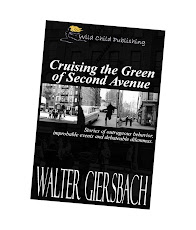
2. “Sarah, My Donna and Child,” Cruising the Green of Second Avenue
3. “Big Willa and a Push Toward the Edge,” Wild Child Publishing
4. “The Ghost on the IND Line,” Cruising the Green of Second Avenue
5. “Louise from the Bar,” Paradigm Journal
6. “Cable Window,” Bewildering Stories
7. “Last Year’s Icon,” Every Day Fiction
8. “Who Dares Call It Murder?” OG Opinion Guy
I was hauled back to the basics of conventional writing by James Wood, professor of the Practice of Literary Criticism at Harvard, reviewing books in the New Yorker. Key here is his word convention: what today’s reader expects.
Stephen Crane could write in, “The Little Regiment,” in 1896, “And yet the spirit of this little city, its quaint individuality, poised in the air about the ruins, defying the guns, the sweeping volleys; holding in contempt those avaricious blazes which attacked many dwellings. The hard earthen sidewalks proclaimed the games that had been played there during long lazy days.” And so on. No reader today would patiently suffer an omniscient author describing an anthropomorphic little city.
Old fashioned? Yes. Now what are the new fashions we expect when approaching a story? Conventions are akin to entering a strange building and knowing where the facilities are located. Entering a dark house, we want to know the stairs will have handrails and there will be light switches next to the doors.
Here are a few of the amenities—Wood’s “basic grammar”—we look for:
Sweep and Focus. Wood sees “cinematic sweep followed by the selection of small, telling details” at the core of realist fiction. It’s the vernacular in which mainstream stories are written—the very language readers anticipate, beginning with the establishing location shot. (I stepped from the air-conditioned bus into another world. Humid air made me recoil as I dropped my bag and stared at the shimmering white courthouse, the blank-faced stores, the dusty asphalt of an empty street.)1
A Mix of Detail. These are the small, crystal-clear items that define a person in a few words. (Sam’s money needed to be leashed to keep it from running into a bar or bookstore. I figured I’d hit the middle class when I could afford to kill cockroaches with Raid spray instead of a hammer. Sam would need to borrow the hammer.)2
Specifics, Not Generalities. Where did Crane get off using a word like “quaint,” and what “games” were played there? Readers want details. (Evenings started with us sitting on a stoop drinking Rheingold. Then someone would suggest going over to Second Avenue to get a bialy smothered in cream cheese, onions and pickled herring. Saturdays, there were demonstrations and anti-war protests, but no one wanted to get involved. It was too hot and depersonalizing to carry a placard. Our Tar Beach was the rooftop on East Sixth Street. Always there was the sound of drums echoing down the street.)3
Characterization through Minutiae. Flash fiction’s word limitations require the most concise way of drawing a character. Done once—and well—you may not need to revisit your character’s description. (Sarah didn’t open up much. She kept her emotions tightly packaged like a souvenir piece of wedding cake, full of memories but totally indigestible.)4
Padding. A little filler helps a story the way bread extends a good meatloaf. Padding doesn’t move the story ahead as much as it lets the reader catch a breath and—hopefully—empathize with a character. (What made me feel so fine was the danger that I was Pinocchio and somebody would turn me into a donkey for running away to the circus. I don’t think Pinocchio ever had a girl hanging onto his arm, though. The warm sweat of her hand made the forbidden pleasure feel specially good.)5
Memories. Recollection and reflection offer depth to a plot, a protagonist or a situation. It’s also a way to bring in a back story. (They had been solicitous after David Marshall Sullivan’s coronary embolism. They regretted that by dying unexpectedly he hadn’t lived up to his contract, but they didn’t hold that against her when she was severed. They said it was just a corporate reorganization. Their severance package was generous when they fired her, but her own regrets had more to do with losing David than their employer.)6
Lyrical Phrasing. A touch of poesy ratchets the story up a notch over pedestrian writing. Call it a blossom dropped on a sidewalk; it heightens the beauty. (The trail of her footsteps in the sand back to L.A. would imitate those just-born turtles flailing their way to the sea to drink up a new life.)7
Writing instructors demand a “story arc,” from the introductory “narrative hook.” through increasing suspense, and on to a “blackest moment” before the story is resolved. This is satisfying to the reader, even if it’s predictable. At its clumsiest (and especially in movies), it requires the hero to duke it out mano a mano with the enemy, the alien, or the undead until the nemesis is properly dispatched and the screen fades to black. In flash, the resolution needs to take place in a final paragraph or even the concluding sentence. (Humans would probably call our love incest, but there’s no comparable feeling among androids.)8
Your challenge then, at least until your experimental or literary masterpiece is created, is to fulfill these conventions in the most inventive and entertaining manner. Grammar, sweep, detail, specifics, characterization, padding, memory and lyricism all function in greater or lesser amounts as the tools to build a short story. Sidestep or ignore them and the reader won’t recognize the “reality” of your story.
All parenthetical examples are from published stories I’ve written.
1. “Gothic Revival,” Big Pulp
2. “Sarah, My Donna and Child,” Cruising the Green of Second Avenue
3. “Big Willa and a Push Toward the Edge,” Wild Child Publishing
4. “The Ghost on the IND Line,” Cruising the Green of Second Avenue
5. “Louise from the Bar,” Paradigm Journal
6. “Cable Window,” Bewildering Stories
7. “Last Year’s Icon,” Every Day Fiction
8. “Who Dares Call It Murder?” OG Opinion Guy
Monday, March 22, 2010
Two Stories Aired, Recognized
Two nice bits of news greeted me this morning.
Big Pulp has published “Girl Talk,” a bit of scathing humor, at http://bigpulp.com. Dishing the dirt can be so devastating, working like a slow-acting poison. But isn’t it entertaining to watch the victim writhe?
And, Bewildering Stories has chosen “Gothic Revival” for inclusion in its quarterly “Editor’s Choices,” issues 366-376, at http://www.bewilderingstories.com/anthologies/366-376/366-376_antho3.html. Who says literary allusion has to be scholarly and tedious?
Big Pulp has published “Girl Talk,” a bit of scathing humor, at http://bigpulp.com. Dishing the dirt can be so devastating, working like a slow-acting poison. But isn’t it entertaining to watch the victim writhe?
And, Bewildering Stories has chosen “Gothic Revival” for inclusion in its quarterly “Editor’s Choices,” issues 366-376, at http://www.bewilderingstories.com/anthologies/366-376/366-376_antho3.html. Who says literary allusion has to be scholarly and tedious?
Thursday, February 25, 2010
I’m Only Going to Tell You Once
In the 30-plus years I was a corporate mouthpiece and wordsmith, senior managers sidled up to ask if I had any tips for writing. Their memos and plans had all the verve of congealed mac and cheese. This was the crib sheet that I pulled from my desk drawer for them. The suggestions apply also to flash fiction.
1. Use short words and, when you edit your writing, cut, cut, cut! See what makes this piece stand out: “Our world’s well served by his last book, The Old Man and the Sea. He said words should be like small, bright stones, seen in the sand through a clear stream. You know it’s tough to find the ones that are lean, have strength, stand up, shout out and sing loud. At last, each best, true, sole verb or noun takes its place. On a good day, we might write just a page, two or three, then call them done.” Notice each word has just one syllable? It’s not that word choices are overwhelming, but that we move too fast to complete the assignment.
2. Decide what result you want to achieve, what message the reader should take away. Each word, each thought must support this end result. Kill the rhetoric that doesn’t have a damn thing to do with your message.
3. Substitute Anglo-Saxon words when you can. Use “strength” instead of “fortitude,” “start” instead of “commence.” Greek and Latin derivatives are soft and mushy. Why say “apprise” or “inform” when “tell” says the same thing in half the syllables?
4. Avoid clichés, as in this real-life example: “Opening night at the Cirque de Soleil was a strictly A-list affair, with a veritable Who’s Who gathered under the big top for a mind-boggling performance.” Neo-clichés also lurk in memos and meetings: think outside the box, paradigm shift, core competencies, strategic initiative, impact (usually as a verb). Tired words and phrases grow like nits into lice.
5. Don’t worry about the fine points of grammar. Sir Winston Churchill said about dangling participles, “They are an outrage up with which I shall not put.” The same is true about split infinitives. Capt. Kirk always wanted “to boldly go where no one has gone before.” Who’s going to argue with the Captain? Grammatical rigor mortis can make you sound stuffy.
6. As the Microsoft grammar checker on your toolbar demands, choose the active voice over the passive. How easy it is to say, “The policy was reviewed before implementation,” instead of “The manager reviewed the policy before….” It’s amazing to think how much work gets done by itself!
7. Avoid adjectives. They’re a lazy way to bring an idea to life. Instead of writing about a “lonely office after everyone has gone home,” go for the image with something like, “The loudest noise was the cleaning woman’s vacuum cleaner at the far end of the hallway.”
8. Prosaic writing dulls the mind. Rewrite sentences, such as “The performance was so exciting that the audience was stunned when it was over,” with imagery. Substitute “There was a minute of stunned silence before the applause broke out.” Undistinguished writing is the stuff of TV news reporters.
9. Lazy verbiage that searches for the dramatic will always hijack your story. Here’s an example that came from one of Mitt Romney’s highly paid Bain & Co. consultants: “When you join the Corporation, you also become a member of a very special and very unique team. It’s a worldwide team of over 50,000 men and women whose diverse mix of experience, energy and expertise makes us a true force to be reckoned with in the global marketplace. (And more blah blah blah.) Wow! Mind-numbingly vapid!
10. Computer spell checking won’t do your work for you. Spelling must be absolutely correct. If a person can’t spell the difference between burro and burrow, it’s fair to say he doesn’t know his ass from a hole in the ground.
1. Use short words and, when you edit your writing, cut, cut, cut! See what makes this piece stand out: “Our world’s well served by his last book, The Old Man and the Sea. He said words should be like small, bright stones, seen in the sand through a clear stream. You know it’s tough to find the ones that are lean, have strength, stand up, shout out and sing loud. At last, each best, true, sole verb or noun takes its place. On a good day, we might write just a page, two or three, then call them done.” Notice each word has just one syllable? It’s not that word choices are overwhelming, but that we move too fast to complete the assignment.
2. Decide what result you want to achieve, what message the reader should take away. Each word, each thought must support this end result. Kill the rhetoric that doesn’t have a damn thing to do with your message.
3. Substitute Anglo-Saxon words when you can. Use “strength” instead of “fortitude,” “start” instead of “commence.” Greek and Latin derivatives are soft and mushy. Why say “apprise” or “inform” when “tell” says the same thing in half the syllables?
4. Avoid clichés, as in this real-life example: “Opening night at the Cirque de Soleil was a strictly A-list affair, with a veritable Who’s Who gathered under the big top for a mind-boggling performance.” Neo-clichés also lurk in memos and meetings: think outside the box, paradigm shift, core competencies, strategic initiative, impact (usually as a verb). Tired words and phrases grow like nits into lice.
5. Don’t worry about the fine points of grammar. Sir Winston Churchill said about dangling participles, “They are an outrage up with which I shall not put.” The same is true about split infinitives. Capt. Kirk always wanted “to boldly go where no one has gone before.” Who’s going to argue with the Captain? Grammatical rigor mortis can make you sound stuffy.
6. As the Microsoft grammar checker on your toolbar demands, choose the active voice over the passive. How easy it is to say, “The policy was reviewed before implementation,” instead of “The manager reviewed the policy before….” It’s amazing to think how much work gets done by itself!
7. Avoid adjectives. They’re a lazy way to bring an idea to life. Instead of writing about a “lonely office after everyone has gone home,” go for the image with something like, “The loudest noise was the cleaning woman’s vacuum cleaner at the far end of the hallway.”
8. Prosaic writing dulls the mind. Rewrite sentences, such as “The performance was so exciting that the audience was stunned when it was over,” with imagery. Substitute “There was a minute of stunned silence before the applause broke out.” Undistinguished writing is the stuff of TV news reporters.
9. Lazy verbiage that searches for the dramatic will always hijack your story. Here’s an example that came from one of Mitt Romney’s highly paid Bain & Co. consultants: “When you join the Corporation, you also become a member of a very special and very unique team. It’s a worldwide team of over 50,000 men and women whose diverse mix of experience, energy and expertise makes us a true force to be reckoned with in the global marketplace. (And more blah blah blah.) Wow! Mind-numbingly vapid!
10. Computer spell checking won’t do your work for you. Spelling must be absolutely correct. If a person can’t spell the difference between burro and burrow, it’s fair to say he doesn’t know his ass from a hole in the ground.
Wednesday, February 24, 2010
Mystery and Humor
“Epitaph with Flowers” is a crackling good mystery that's now up at Big Pulp--love, death, lost treasure and betrayal. All in various shades of noir. Print it out for reading on the run, while waiting for the bus or during that bathroom break at the office. At http://bigpulp.com/chill_giersbach_epitaph.html.
Now, we all know there’s only a single letter separating “ironic” from “iconic.” You decide which is which, between the mystery above and the humor below.
If it’s not pollution making us irritable, it’s the alternative to fossil-fuel energy. Who’d ever believe freedom from the oil cartel would invite the dreaded “Wind Turbine Syndrome?” "Blowing in the Wind" is new satire at http://www.short-humour.org.uk/3writersshowcase/blowinginthewind.htm
Now, we all know there’s only a single letter separating “ironic” from “iconic.” You decide which is which, between the mystery above and the humor below.
If it’s not pollution making us irritable, it’s the alternative to fossil-fuel energy. Who’d ever believe freedom from the oil cartel would invite the dreaded “Wind Turbine Syndrome?” "Blowing in the Wind" is new satire at http://www.short-humour.org.uk/3writersshowcase/blowinginthewind.htm
Wednesday, February 3, 2010
Tsunami Changes in Book Selling
There was a 6-column-inch blurb in Sunday's Times that Seattle-based Amazon on Christmas Day sold more e-books for its Kindle than paper-based books.
Interesting factoid, but more startling was the next sentence that Laredo, Texas (pop. 250,000) closed its last bookstore. (Laredo's population is only slightly smaller than that of Newark, NJ, one of the poorer urban areas.) I checked my online Yellow Pages, though, and actually came up with eight Laredo bookstores, three of which were Christian and one Spanish-language. Two recognizable names were Barnes & Noble and B. Dalton. That left two that appeared to be independent bookstores.
What's the takeaway?
> A lot of people got Kindles for Christmas. (My Seattle-based friend has 4,600 books on his e-reader, most which he admits he'll never read.)
> Texans read less than Newarkers, where there are 84 listings for bookstores. Newark's median household income is $26,913. Laredo's median HH income is $23,832, but has a lower cost of living index.
> There's a sea change coming in the way--and whether--we read books. (Does Steve Jobs know something about e-books that led to the iPad?)
> Laredo's population is 97.1% Latino, but unemployment is just 6%. (Are Hispanics working too hard to read?)
> Bookstores are an endangered enterprise.
I think all of these assumptions are correct.
Interesting factoid, but more startling was the next sentence that Laredo, Texas (pop. 250,000) closed its last bookstore. (Laredo's population is only slightly smaller than that of Newark, NJ, one of the poorer urban areas.) I checked my online Yellow Pages, though, and actually came up with eight Laredo bookstores, three of which were Christian and one Spanish-language. Two recognizable names were Barnes & Noble and B. Dalton. That left two that appeared to be independent bookstores.
What's the takeaway?
> A lot of people got Kindles for Christmas. (My Seattle-based friend has 4,600 books on his e-reader, most which he admits he'll never read.)
> Texans read less than Newarkers, where there are 84 listings for bookstores. Newark's median household income is $26,913. Laredo's median HH income is $23,832, but has a lower cost of living index.
> There's a sea change coming in the way--and whether--we read books. (Does Steve Jobs know something about e-books that led to the iPad?)
> Laredo's population is 97.1% Latino, but unemployment is just 6%. (Are Hispanics working too hard to read?)
> Bookstores are an endangered enterprise.
I think all of these assumptions are correct.
Subscribe to:
Posts (Atom)