A good week and it’s not over yet. Bewildering Stories accepted “Angel in My Coffee Cup” after a rewrite—and I didn’t even follow my advice about narrative hooks. (Hamlet wasn’t talking about angels when he said, “There are more things on heaven and earth than are dreamt of in your philosophy.” The phrase kept going through my head as my granddaughter, Morgan, sat across from me at breakfast.) Maybe my magic realism got to their flash fiction editor.
I sent my “Henry Morton Stanley at Shiloh” article off to Military History Online, but no word back. Yeah, I guess I could polish it some more, but let’s see what happens.
The Asbury Park Press invites reader book reviews. Last Sunday, they picked up mine for Stieg Larsson’s The Girl Who Played with Fire. (“…Unmasks the sanctimonious Swedish society and the murderous tendencies buried in mystery. And what a superb heroine the tattooed, dyslexic hacker Lisabeth Sander is!”)
There’s still a wealth of material for my Holling Clancy Holling blog (at http://hollingcholling.blogspot.com/) and I finished off the Web site for our writing group at the Manchester public library (http://sites.google.com/site/manchesterwriters/home).
I think I could be at Antarctica or Armpit, Ohio. as long as the party continues in my head.
Wednesday, June 9, 2010


Wednesday, June 2, 2010
Grab the Reader in 30 Words
News writing is excellent training. I took journalism classes when I was 19 or 20, then really learned to write on the Hinsdale (Illinois) Doings. I had to get the who, what, where, when and why down in the 30-word “lede” (spelled that way so’s not to confuse it with Linotype “lead.”). Tough job. Try it.
Then news writing leaped back a hundred years. The soft and fuzzy lede would begin something like, “It was an idyllic day in June when nine-year-old Tabitha and her perky terrier, Mikey, romped down the sidewalk. Unbeknownst to them, Charles Meriwether left the bar inebriated and got into his buggy. The Gods must have cried in anguish as Meriwether’s buggy approached the corner where little Tabitha….” Well, you get the drift.
Now we’re back to requiring a narrative hook—the first handful of words that will capture the reader at his screen, make him click through to another Web site, and continue reading. Tough job. I began looking at leads from the RSS feeds that pour into my mailbox each morning. What I found is a picture of how short our attention span is—and how readers can be manipulated to click on links. Read more of how to “Hook Your Readers” at http://www.everydayfiction.com/flashfictionblog/hook-your-readers/#comments.
Oh, Tabitha? Along about the 10th paragraph you learn she'll be okay. But the dog is dead.
Then news writing leaped back a hundred years. The soft and fuzzy lede would begin something like, “It was an idyllic day in June when nine-year-old Tabitha and her perky terrier, Mikey, romped down the sidewalk. Unbeknownst to them, Charles Meriwether left the bar inebriated and got into his buggy. The Gods must have cried in anguish as Meriwether’s buggy approached the corner where little Tabitha….” Well, you get the drift.
Now we’re back to requiring a narrative hook—the first handful of words that will capture the reader at his screen, make him click through to another Web site, and continue reading. Tough job. I began looking at leads from the RSS feeds that pour into my mailbox each morning. What I found is a picture of how short our attention span is—and how readers can be manipulated to click on links. Read more of how to “Hook Your Readers” at http://www.everydayfiction.com/flashfictionblog/hook-your-readers/#comments.
Oh, Tabitha? Along about the 10th paragraph you learn she'll be okay. But the dog is dead.
Tuesday, May 18, 2010
Everything Old Is New Again
The score in 1675 was Indians-1, English-0. My article on America's most devastating war was just reprinted in American Museum Magazine, at http://www.theamericanmuseum.org/may.10.first.html. I had four ancestors in the conflict; some lived to tell about it.
The story originally ran in Military History Online and was perhaps my first foray into early American History since I had never heard of King Philip’s War. This was followed by pieces on the first shots fired in the Civil War—at Barrancas, Fla., not Fort Sumter; Nieuw Amsterdam’s notorious Gov. Willem Kieft who slaughtered area tribes people; and Bacon’s rebellion in Virginia a hundred years before the American Revolution.
Why can’t history be made more interesting to school kids? I would have been fascinated, but it took me half a century to come around and learn the hard way.
The story originally ran in Military History Online and was perhaps my first foray into early American History since I had never heard of King Philip’s War. This was followed by pieces on the first shots fired in the Civil War—at Barrancas, Fla., not Fort Sumter; Nieuw Amsterdam’s notorious Gov. Willem Kieft who slaughtered area tribes people; and Bacon’s rebellion in Virginia a hundred years before the American Revolution.
Why can’t history be made more interesting to school kids? I would have been fascinated, but it took me half a century to come around and learn the hard way.
Thursday, April 29, 2010
The New Yorker Suffering Alzheimer’s?
It had to happen, that one of the New Yorker’s fabled proofreaders missed a diacritical mark. If you don’t know it, this magazine is the last hold-out for spelling co-op with an umlaut, but no hyphen. Coöp. And, actors who rôle play.
So I nearly coughed up my lunch when I read [Apr. 26, p. 20] “Obama’s terminally naive 'engagement' has achieved nothing but the loss or 15 months.” NO! It’s naïve with an umlaut—those two little German dots on a French word that changes the pronunciation.
But, the New Yorker can’t claim to have misplaced its pocketbook full of punctuation following an afternoon of sherry tippling, because in the next column we see Richard Perle, “the Reagan Administration’s über-hawk.” For a moment, I thought I saw the sun setting on the tidal flats of American civilization, but it really was a lapse caused by age. Don’t we all forget where we put our accent marks now and then?
So I nearly coughed up my lunch when I read [Apr. 26, p. 20] “Obama’s terminally naive 'engagement' has achieved nothing but the loss or 15 months.” NO! It’s naïve with an umlaut—those two little German dots on a French word that changes the pronunciation.
But, the New Yorker can’t claim to have misplaced its pocketbook full of punctuation following an afternoon of sherry tippling, because in the next column we see Richard Perle, “the Reagan Administration’s über-hawk.” For a moment, I thought I saw the sun setting on the tidal flats of American civilization, but it really was a lapse caused by age. Don’t we all forget where we put our accent marks now and then?
Sunday, April 25, 2010
Away in a Manger, Darkly
People who identify taboos should realize they wouldn't be so popular if, well, if they weren't labeled. I guess the Bible had a thing or two to say about bestiality. Not that I think it's high in popularity--sort of like a book ranking 10,000 on Amazon. But it's funny. Sex of any kind is funny to begin with, but here's another take on the subject at The Short Humour Site. Snicker and click at http://www.short-humour.org.uk/3writersshowcase/awayinamangerdarkly.htm.
Sunday, April 4, 2010
Hook Your Readers
Advertising copywriters insist that a good poster capture the attention of a commuter dashing to catch the 8:05 train. That’s a tough chore—almost as tough as grabbing a reader in the first 30 words of your short story.
The grabber is called a narrative hook, an intriguing opener that makes the story impossible to put down.
I’ve been scrutinizing the openers from flash fiction sites that depend on a feed into your mailbox and a click-through to their site. These teasers must make you hit their link or they’ve failed. Check these out from Everyday Weirdness (http://everydayweirdness.com)
• “Faith Stands Guard” by Deborah A. Blood: “Holy shit, Faith,” Todd cried, hopping awkwardly to avoid the small terrier. “Do you have to lay there?” He continued toward the kitchen, shouting over his shoulder, “I’m gonna end up stepping on your dog!”...
• “A Note on Spiderlings” by Brenda Stokes: Not all spiders eat their young. Take this from one who knows. I love my spiderlings. All hundreds. I ’d never dream of eating them. It’s barbaric! But sometimes, exceptions must be made....
• “Scuttle” by Milo J Fowler: True Story: I never thought buying a gallon of milk would prove to be fatal. He came at us like the Marshmallow Man, pasty but hairy and flushed and sweaty, gargling and huffing, staring straight through us as he staggered, both arms flailing out...
• “Service” by M.E. Ray: The second person that showed up was carrying a shotgun. He had two Labs with him and looked like he’d been hunting. He made eye contact from the far side of the smoking crater and we both looked down at the cooling metallic teardrop embedded below...
Or these, from Short Story Library (http://shortstory.us.com/):
• “Wild Weather” by David McVey: There are two ways that I could tell this story. I could start at the beginning and keep going until the story ends. That, of course, is how it happened. But it’s not how I experienced it nor how I remember it. In particular, it’s not how I remember Kathy and she, after all, is the...
• “I Will Not Eat Cookies” by Amy Corbin: Recently, I gave all my size 4 clothing to Goodwill. This was very hard to do. I’d been holding on to those things for 10 years. I told myself I was not giving up on being size 4. It was just that these clothes were no longer in style, and when I got down to...
On of my favorite story feeds comes from Big Jewel (www.thebigjewel.com) This week’s lead features “New Old Wives Tales” by Whitney Collins: If someone dies on Good Friday, they go directly to heaven. If someone dies on Fat Tuesday, they probably had diabetes. If your nose itches, a fool is about to kiss you. If your crotch itches, blame Derek. Be sure to wait an hour after eating before dumpster diving. If you carry an acorn in your pocket, good [...]
C’mon, tell me that most of these leads make you want to shut out the world and read on.
Our reading culture is changing because of multi-purposing distractions. The TV is going, the iPod is playing MP3 downloads, the cell phone is dinging new text messages, you’re trying to Facebook a comment on your netbook—all simultaneously—and some presumptuous writer wants your attention? Get serious!
Darrin Miller states in www.Writing.com, “Writing that all too important hook…has to be done in this business in order to make it…. People are busy, too busy to waste their time reading a bad book or short. We have to make them want to read and not stop reading until it’s over and this has to be done at the beginning. All the greats have done it.
“Stephen King's It would have been impossible to put down. ‘The terror, which would not end for another twenty-eight years—if it did ever end—began, so far as I know or can tell, with a boat made from a sheet of newspaper floating down a gutter swollen with rain.’
“Or H. P. Lovecraft’s, Thing On the Doorstep. ‘It is true that I have sent six bullets through the head of my best friend, and yet I hope to show by this statement that I am not his murderer.’
“And Dean Koontz, who is a master of the craft and of writing that single line, which would effortlessly snag his readers. The opener from Strangers, ‘Domimick Corvaisis went to sleep under a light wool blanket and a crisp white sheet, sprawled alone in the bed, but he woke elsewhere—in the darkness at the back of the large foyer closet, behind concealing coats and jackets.’”
When you feel your story is finished, go back and isolate the lead. Will it tease, intrigue, horrify, invite or cause the reader’s blood pressure to rise? Good. Now make sure the story’s last paragraph—even the last line—is just as memorable.
The grabber is called a narrative hook, an intriguing opener that makes the story impossible to put down.
I’ve been scrutinizing the openers from flash fiction sites that depend on a feed into your mailbox and a click-through to their site. These teasers must make you hit their link or they’ve failed. Check these out from Everyday Weirdness (http://everydayweirdness.com)
• “Faith Stands Guard” by Deborah A. Blood: “Holy shit, Faith,” Todd cried, hopping awkwardly to avoid the small terrier. “Do you have to lay there?” He continued toward the kitchen, shouting over his shoulder, “I’m gonna end up stepping on your dog!”...
• “A Note on Spiderlings” by Brenda Stokes: Not all spiders eat their young. Take this from one who knows. I love my spiderlings. All hundreds. I ’d never dream of eating them. It’s barbaric! But sometimes, exceptions must be made....
• “Scuttle” by Milo J Fowler: True Story: I never thought buying a gallon of milk would prove to be fatal. He came at us like the Marshmallow Man, pasty but hairy and flushed and sweaty, gargling and huffing, staring straight through us as he staggered, both arms flailing out...
• “Service” by M.E. Ray: The second person that showed up was carrying a shotgun. He had two Labs with him and looked like he’d been hunting. He made eye contact from the far side of the smoking crater and we both looked down at the cooling metallic teardrop embedded below...
Or these, from Short Story Library (http://shortstory.us.com/):
• “Wild Weather” by David McVey: There are two ways that I could tell this story. I could start at the beginning and keep going until the story ends. That, of course, is how it happened. But it’s not how I experienced it nor how I remember it. In particular, it’s not how I remember Kathy and she, after all, is the...
• “I Will Not Eat Cookies” by Amy Corbin: Recently, I gave all my size 4 clothing to Goodwill. This was very hard to do. I’d been holding on to those things for 10 years. I told myself I was not giving up on being size 4. It was just that these clothes were no longer in style, and when I got down to...
On of my favorite story feeds comes from Big Jewel (www.thebigjewel.com) This week’s lead features “New Old Wives Tales” by Whitney Collins: If someone dies on Good Friday, they go directly to heaven. If someone dies on Fat Tuesday, they probably had diabetes. If your nose itches, a fool is about to kiss you. If your crotch itches, blame Derek. Be sure to wait an hour after eating before dumpster diving. If you carry an acorn in your pocket, good [...]
C’mon, tell me that most of these leads make you want to shut out the world and read on.
Our reading culture is changing because of multi-purposing distractions. The TV is going, the iPod is playing MP3 downloads, the cell phone is dinging new text messages, you’re trying to Facebook a comment on your netbook—all simultaneously—and some presumptuous writer wants your attention? Get serious!
Darrin Miller states in www.Writing.com, “Writing that all too important hook…has to be done in this business in order to make it…. People are busy, too busy to waste their time reading a bad book or short. We have to make them want to read and not stop reading until it’s over and this has to be done at the beginning. All the greats have done it.
“Stephen King's It would have been impossible to put down. ‘The terror, which would not end for another twenty-eight years—if it did ever end—began, so far as I know or can tell, with a boat made from a sheet of newspaper floating down a gutter swollen with rain.’
“Or H. P. Lovecraft’s, Thing On the Doorstep. ‘It is true that I have sent six bullets through the head of my best friend, and yet I hope to show by this statement that I am not his murderer.’
“And Dean Koontz, who is a master of the craft and of writing that single line, which would effortlessly snag his readers. The opener from Strangers, ‘Domimick Corvaisis went to sleep under a light wool blanket and a crisp white sheet, sprawled alone in the bed, but he woke elsewhere—in the darkness at the back of the large foyer closet, behind concealing coats and jackets.’”
When you feel your story is finished, go back and isolate the lead. Will it tease, intrigue, horrify, invite or cause the reader’s blood pressure to rise? Good. Now make sure the story’s last paragraph—even the last line—is just as memorable.
Wednesday, March 24, 2010
Sharpening Conventional Tools
Neophytes often begin with genre fiction as being easy stuff to get into. And this is where I stumble when I critique their work. Their characters are overdrawn, descriptions distract from plot flow, story lines get bogged down in irrelevancies, and memoir fogs the exposition.
I was hauled back to the basics of conventional writing by James Wood, professor of the Practice of Literary Criticism at Harvard, reviewing books in the New Yorker. Key here is his word convention: what today’s reader expects.
Stephen Crane could write in, “The Little Regiment,” in 1896, “And yet the spirit of this little city, its quaint individuality, poised in the air about the ruins, defying the guns, the sweeping volleys; holding in contempt those avaricious blazes which attacked many dwellings. The hard earthen sidewalks proclaimed the games that had been played there during long lazy days.” And so on. No reader today would patiently suffer an omniscient author describing an anthropomorphic little city.
Old fashioned? Yes. Now what are the new fashions we expect when approaching a story? Conventions are akin to entering a strange building and knowing where the facilities are located. Entering a dark house, we want to know the stairs will have handrails and there will be light switches next to the doors.
Here are a few of the amenities—Wood’s “basic grammar”—we look for:
Sweep and Focus. Wood sees “cinematic sweep followed by the selection of small, telling details” at the core of realist fiction. It’s the vernacular in which mainstream stories are written—the very language readers anticipate, beginning with the establishing location shot. (I stepped from the air-conditioned bus into another world. Humid air made me recoil as I dropped my bag and stared at the shimmering white courthouse, the blank-faced stores, the dusty asphalt of an empty street.)1
A Mix of Detail. These are the small, crystal-clear items that define a person in a few words. (Sam’s money needed to be leashed to keep it from running into a bar or bookstore. I figured I’d hit the middle class when I could afford to kill cockroaches with Raid spray instead of a hammer. Sam would need to borrow the hammer.)2
Specifics, Not Generalities. Where did Crane get off using a word like “quaint,” and what “games” were played there? Readers want details. (Evenings started with us sitting on a stoop drinking Rheingold. Then someone would suggest going over to Second Avenue to get a bialy smothered in cream cheese, onions and pickled herring. Saturdays, there were demonstrations and anti-war protests, but no one wanted to get involved. It was too hot and depersonalizing to carry a placard. Our Tar Beach was the rooftop on East Sixth Street. Always there was the sound of drums echoing down the street.)3
Characterization through Minutiae. Flash fiction’s word limitations require the most concise way of drawing a character. Done once—and well—you may not need to revisit your character’s description. (Sarah didn’t open up much. She kept her emotions tightly packaged like a souvenir piece of wedding cake, full of memories but totally indigestible.)4
Padding. A little filler helps a story the way bread extends a good meatloaf. Padding doesn’t move the story ahead as much as it lets the reader catch a breath and—hopefully—empathize with a character. (What made me feel so fine was the danger that I was Pinocchio and somebody would turn me into a donkey for running away to the circus. I don’t think Pinocchio ever had a girl hanging onto his arm, though. The warm sweat of her hand made the forbidden pleasure feel specially good.)5
Memories. Recollection and reflection offer depth to a plot, a protagonist or a situation. It’s also a way to bring in a back story. (They had been solicitous after David Marshall Sullivan’s coronary embolism. They regretted that by dying unexpectedly he hadn’t lived up to his contract, but they didn’t hold that against her when she was severed. They said it was just a corporate reorganization. Their severance package was generous when they fired her, but her own regrets had more to do with losing David than their employer.)6
Lyrical Phrasing. A touch of poesy ratchets the story up a notch over pedestrian writing. Call it a blossom dropped on a sidewalk; it heightens the beauty. (The trail of her footsteps in the sand back to L.A. would imitate those just-born turtles flailing their way to the sea to drink up a new life.)7
Writing instructors demand a “story arc,” from the introductory “narrative hook.” through increasing suspense, and on to a “blackest moment” before the story is resolved. This is satisfying to the reader, even if it’s predictable. At its clumsiest (and especially in movies), it requires the hero to duke it out mano a mano with the enemy, the alien, or the undead until the nemesis is properly dispatched and the screen fades to black. In flash, the resolution needs to take place in a final paragraph or even the concluding sentence. (Humans would probably call our love incest, but there’s no comparable feeling among androids.)8
Your challenge then, at least until your experimental or literary masterpiece is created, is to fulfill these conventions in the most inventive and entertaining manner. Grammar, sweep, detail, specifics, characterization, padding, memory and lyricism all function in greater or lesser amounts as the tools to build a short story. Sidestep or ignore them and the reader won’t recognize the “reality” of your story.
All parenthetical examples are from published stories I’ve written.
1. “Gothic Revival,” Big Pulp
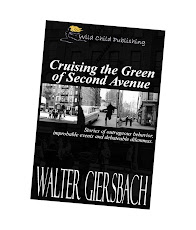
2. “Sarah, My Donna and Child,” Cruising the Green of Second Avenue
3. “Big Willa and a Push Toward the Edge,” Wild Child Publishing
4. “The Ghost on the IND Line,” Cruising the Green of Second Avenue
5. “Louise from the Bar,” Paradigm Journal
6. “Cable Window,” Bewildering Stories
7. “Last Year’s Icon,” Every Day Fiction
8. “Who Dares Call It Murder?” OG Opinion Guy
I was hauled back to the basics of conventional writing by James Wood, professor of the Practice of Literary Criticism at Harvard, reviewing books in the New Yorker. Key here is his word convention: what today’s reader expects.
Stephen Crane could write in, “The Little Regiment,” in 1896, “And yet the spirit of this little city, its quaint individuality, poised in the air about the ruins, defying the guns, the sweeping volleys; holding in contempt those avaricious blazes which attacked many dwellings. The hard earthen sidewalks proclaimed the games that had been played there during long lazy days.” And so on. No reader today would patiently suffer an omniscient author describing an anthropomorphic little city.
Old fashioned? Yes. Now what are the new fashions we expect when approaching a story? Conventions are akin to entering a strange building and knowing where the facilities are located. Entering a dark house, we want to know the stairs will have handrails and there will be light switches next to the doors.
Here are a few of the amenities—Wood’s “basic grammar”—we look for:
Sweep and Focus. Wood sees “cinematic sweep followed by the selection of small, telling details” at the core of realist fiction. It’s the vernacular in which mainstream stories are written—the very language readers anticipate, beginning with the establishing location shot. (I stepped from the air-conditioned bus into another world. Humid air made me recoil as I dropped my bag and stared at the shimmering white courthouse, the blank-faced stores, the dusty asphalt of an empty street.)1
A Mix of Detail. These are the small, crystal-clear items that define a person in a few words. (Sam’s money needed to be leashed to keep it from running into a bar or bookstore. I figured I’d hit the middle class when I could afford to kill cockroaches with Raid spray instead of a hammer. Sam would need to borrow the hammer.)2
Specifics, Not Generalities. Where did Crane get off using a word like “quaint,” and what “games” were played there? Readers want details. (Evenings started with us sitting on a stoop drinking Rheingold. Then someone would suggest going over to Second Avenue to get a bialy smothered in cream cheese, onions and pickled herring. Saturdays, there were demonstrations and anti-war protests, but no one wanted to get involved. It was too hot and depersonalizing to carry a placard. Our Tar Beach was the rooftop on East Sixth Street. Always there was the sound of drums echoing down the street.)3
Characterization through Minutiae. Flash fiction’s word limitations require the most concise way of drawing a character. Done once—and well—you may not need to revisit your character’s description. (Sarah didn’t open up much. She kept her emotions tightly packaged like a souvenir piece of wedding cake, full of memories but totally indigestible.)4
Padding. A little filler helps a story the way bread extends a good meatloaf. Padding doesn’t move the story ahead as much as it lets the reader catch a breath and—hopefully—empathize with a character. (What made me feel so fine was the danger that I was Pinocchio and somebody would turn me into a donkey for running away to the circus. I don’t think Pinocchio ever had a girl hanging onto his arm, though. The warm sweat of her hand made the forbidden pleasure feel specially good.)5
Memories. Recollection and reflection offer depth to a plot, a protagonist or a situation. It’s also a way to bring in a back story. (They had been solicitous after David Marshall Sullivan’s coronary embolism. They regretted that by dying unexpectedly he hadn’t lived up to his contract, but they didn’t hold that against her when she was severed. They said it was just a corporate reorganization. Their severance package was generous when they fired her, but her own regrets had more to do with losing David than their employer.)6
Lyrical Phrasing. A touch of poesy ratchets the story up a notch over pedestrian writing. Call it a blossom dropped on a sidewalk; it heightens the beauty. (The trail of her footsteps in the sand back to L.A. would imitate those just-born turtles flailing their way to the sea to drink up a new life.)7
Writing instructors demand a “story arc,” from the introductory “narrative hook.” through increasing suspense, and on to a “blackest moment” before the story is resolved. This is satisfying to the reader, even if it’s predictable. At its clumsiest (and especially in movies), it requires the hero to duke it out mano a mano with the enemy, the alien, or the undead until the nemesis is properly dispatched and the screen fades to black. In flash, the resolution needs to take place in a final paragraph or even the concluding sentence. (Humans would probably call our love incest, but there’s no comparable feeling among androids.)8
Your challenge then, at least until your experimental or literary masterpiece is created, is to fulfill these conventions in the most inventive and entertaining manner. Grammar, sweep, detail, specifics, characterization, padding, memory and lyricism all function in greater or lesser amounts as the tools to build a short story. Sidestep or ignore them and the reader won’t recognize the “reality” of your story.
All parenthetical examples are from published stories I’ve written.
1. “Gothic Revival,” Big Pulp
2. “Sarah, My Donna and Child,” Cruising the Green of Second Avenue
3. “Big Willa and a Push Toward the Edge,” Wild Child Publishing
4. “The Ghost on the IND Line,” Cruising the Green of Second Avenue
5. “Louise from the Bar,” Paradigm Journal
6. “Cable Window,” Bewildering Stories
7. “Last Year’s Icon,” Every Day Fiction
8. “Who Dares Call It Murder?” OG Opinion Guy
Subscribe to:
Posts (Atom)